Choosing the right HP paper shredder is crucial for protecting personal and professional data, with HP models offering a blend of performance, innovation, and trust. HP paper shredders are designed with user experience and security in mind, incorporating features like advanced safety systems, adherence to strict USA and European standards, and often “Zero Maintenance” blades that do not require regular oiling or sharpening. Many models also integrate noise-reduction technology, making them a quieter presence in any workspace.
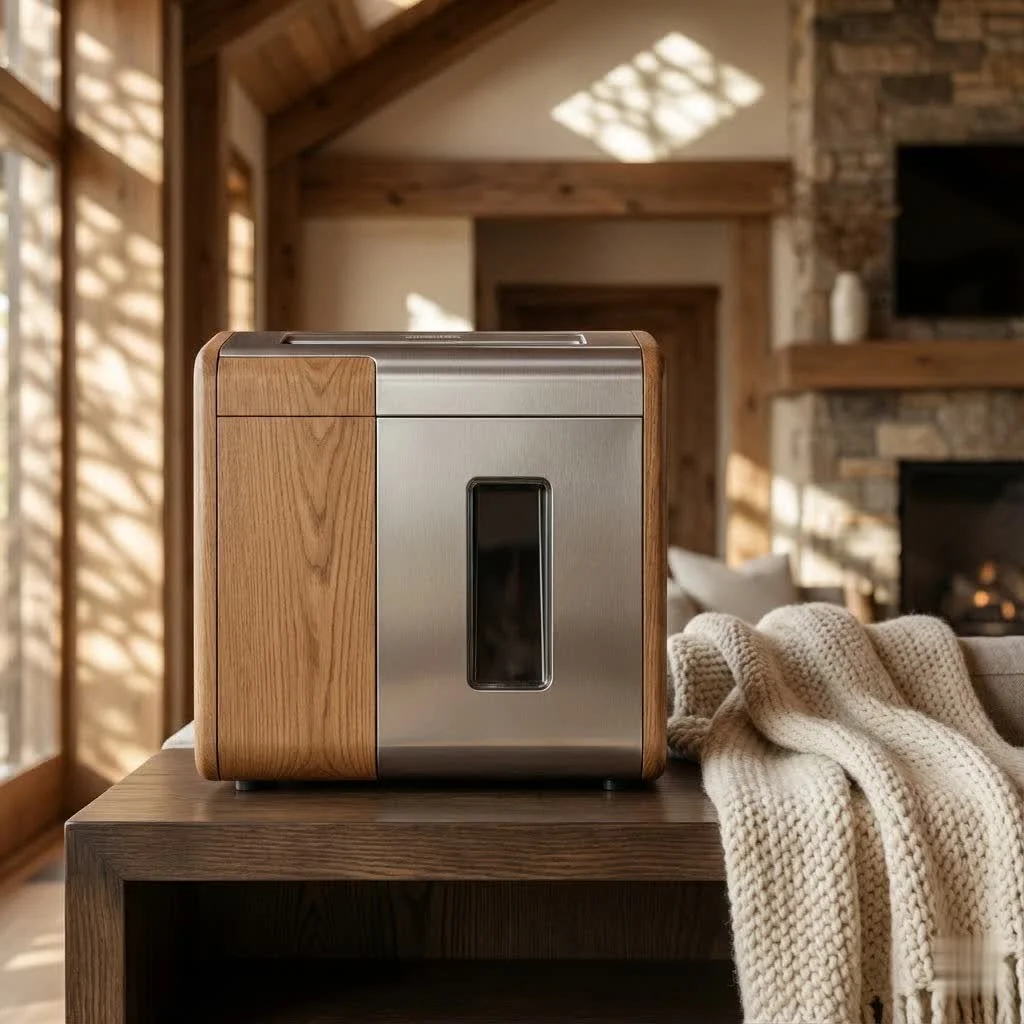 paper shredder in an office setting” style=”margin: 20px auto;width: 800px;max-width: 100%;height: auto” />
With over 15 years of experience in paper shredder mechanics and best practices, I’ve observed HP’s significant impact on the market, providing robust solutions for diverse needs, from home offices to corporate environments. This guide will help you select, use, and maintain your HP paper shredder for secure and efficient document destruction.
Why HP Paper Shredders Stand Out
HP paper shredders are more than just office gadgets; they are guardians of your privacy. What sets them apart? It starts with HP’s commitment to quality and innovation. Their shredders are designed with user experience and security in mind, incorporating features that simplify the often-tedious task of document destruction. Many HP models boast advanced safety systems, adhering to strict USA and European standards to prevent accidents with secure, guarded paper entries and sensors that stop the machine if an obstruction is detected.
One of HP’s most compelling claims is “Zero Maintenance” blades on certain models, meaning they don’t require regular oiling or sharpening, unlike many competitors. This not only saves you time and money but also ensures consistent performance over the lifespan of the machine. Plus, HP frequently integrates noise-reduction technology, making their shredders a quieter presence in your workspace, a welcome feature for any busy office or peaceful home environment.
Understanding HP Paper Shredder Types and Security Levels
The first step in choosing an HP paper shredder is understanding the different types of cuts and their corresponding security levels. This dictates how effectively your documents are destroyed and how difficult it would be for someone to reassemble them.
Strip-Cut Shredders: The Basics
Strip-cut shredders offer the most basic level of security. They slice documents into long, narrow strips, similar to tagliatelle pasta. While effective for general waste that doesn’t contain highly sensitive information, the strips can potentially be reassembled, especially with modern technology. HP offers fewer strip-cut models due to the focus on higher security. These typically fall into security levels P-1 or P-2 according to the DIN 66399 standard.
Cross-Cut (Particle Cut) Shredders: Enhanced Security
|
Our Picks for the Best Paper Shredder in 2026
As an Amazon Associate I earn from qualifying purchases.
|
||
| Num | Product | Action |
|---|---|---|
| 1 | Amazon Basics Paper Shredder for Home and Office, 8-Sheet Strip Cut, CD/ Credit Card Shredder, 3.4 Gallon Wastebasket , Black |

|
| 2 | Woolsche 12-Sheet Cross Cut Paper Shredder with Large 5.55-Gallon Basket - P-4 Security, 3-Mode Shred for Cards/CDs/Staples/Clips - Jam Proof System for Office (ETL Certified) |
|
| 3 | Amazon Basics 200-Sheet Auto Feed Cross Cut Paper Shredder with Pullout Basket, Black |
|
| 4 | Amazon Basics 8-Sheet Strip Cut Paper, CD, and Credit Card Shredder with Auto-Off Compact, Portable Design, No Basket, Extendable Arm, Black |
|
| 5 | Suntiko Small Paper Shredder for Home, 6 Sheet Strip Cut Paper Shredder Without Basket,Portable Shredder Extendable Arm Design with Overheat Protection for Home Office |
|
| 6 | Amazon Basics Cross Cut Paper and Credit Card Shredder for Security - 8-Sheet, Heavy Duty, White |
|
| 7 | Amazon Basics 6 Sheet Cross Cut Paper and Credit Card Home Office Shredder with 3.8 Gallon Bin, Black |
|
| 8 | Amazon Basics Cross Cut Paper and Credit Card Shredder, 12 Sheet (New Model), Black |
|
| 9 | Amazon Basics 8-Sheet Cross Cut Paper Shredder and Credit Card Shredder - Black |
|
| 10 | Fellowes 14C10 14-Sheet Cross-Cut Home Office Paper Shredder |
|
Stepping up in security, cross-cut shredders are a popular choice for both home and small office use. Instead of just strips, these machines cut documents both lengthwise and crosswise, creating smaller, confetti-like pieces. This significantly increases the difficulty of reassembly, offering a much better defense against identity theft. HP’s cross-cut shredders typically meet security levels P-3 or P-4. Many HP OneShred and Pro Shredder series models utilize cross-cut technology, offering a great balance of security and affordability. For example, the HP OneShred 8CC and HP Pro Shredder 15CC are excellent choices for everyday secure shredding needs.
Micro-Cut and Fine-Cut Shredders: The Ultimate in Data Protection
For highly confidential documents, such as patient records, legal papers, or sensitive financial data, micro-cut shredders are the gold standard. These machines reduce paper into incredibly tiny particles, making reconstruction virtually impossible. This highest level of security is often sought by government offices and businesses handling extremely sensitive information. HP’s micro-cut shredders achieve security levels P-5 and P-6.
HP has also introduced “Fine-Cut” shredders, which they describe as offering the smallest shred size in their lineup, reducing documents to minuscule 2mm x 10mm pieces. This level of destruction ensures your information is truly obliterated. Models like the HP OneShred 16MC and HP Pro Shredder 10MC exemplify HP’s dedication to maximum data protection.
Here’s a quick comparison of cut types and security levels:
| Cut Type | Particle Size (approx.) | DIN Security Level | Ideal Use Case |
|---|---|---|---|
| Strip-Cut | Long strips | P-1, P-2 | Non-confidential documents |
| Cross-Cut | Small rectangles | P-3, P-4 | General confidential documents, home/small office |
| Micro-Cut | Tiny particles | P-5 | Highly sensitive personal/business documents |
| Fine-Cut (HP) | Ultra-tiny particles | P-6 | Top-secret, extremely confidential documents |
Finding Your Perfect Match: How to Choose an HP Paper Shredder
Selecting the ideal HP paper shredder involves a bit more than just picking the prettiest model. You need a machine that aligns with your specific needs. “Think about your daily shredding habits,” advises Julian Thorne, a long-time document security consultant. “Are you a single user with a small stack of bills, or an entire department dealing with archives? This makes all the difference.”
Assessing Your Shredding Needs: Home, Office, or Commercial?
HP categorizes its shredders into personal, small and medium business, and commercial/government use.
- Personal/Home Office: If you’re shredding occasionally or in small volumes (e.g., up to 50 sheets a day), an 8-12 sheet capacity, cross-cut or micro-cut shredder will likely suffice.
- Small/Medium Business: For moderate volumes and multiple users, look for higher sheet capacities (12-20 sheets), longer run times, and P-4 or P-5 security levels. Auto-feed models become incredibly useful here.
- Commercial/Government: These environments demand robust machines with high sheet capacities, long continuous run times, and the highest security levels (P-5 or P-6) to handle vast amounts of sensitive documents.
Sheet Capacity and Auto-Feed: Efficiency at Your Fingertips
Sheet capacity refers to how many sheets of paper your shredder can process at once. Many HP paper shredders excel with auto-feed capabilities, allowing you to load a stack of paper into a tray and let the machine do the work automatically. This is a major upgrade for bulk shredding. For instance, the HP AF1512 Micro-Cut Shredder features a 150-sheet auto-feed tray, while larger office models like the HP Pro Shredder Auto 400CC can handle up to 400 sheets at once. This convenience means you can set it and forget it, freeing you up for other tasks.
Beyond Paper: What Else Can Your HP Shredder Destroy?
It’s not just about paper anymore. Many HP shredders are designed to destroy other items that pose a security risk:
- Staples and Paper Clips: Most cross-cut and micro-cut HP shredders can handle these without an issue, saving you time from removing them manually.
- Credit Cards: A vital feature for protecting financial identity, many HP shredders can safely destroy credit cards through the manual feed slot.
- CDs/DVDs: Some heavy-duty HP models also offer the ability to shred optical media, though this is less common in personal-use shredders. Make sure to check the specifications.
Run Time and Duty Cycle: Keeping Your Shredder Cool
Shredders, especially personal ones, have a “run time” (how long they can continuously shred) and a “cool-down time.” Exceeding the run time can lead to overheating and automatic shutdown to prevent damage. For heavy use, opt for HP models with longer run times (e.g., 20-40 minutes) and shorter cool-down periods. Industrial-grade HP shredders often feature continuous duty motors.
Essential Features for a Smooth Shredding Experience
- Anti-Jam Technology: HP often incorporates unique anti-jam mechanisms, including automatic reverse functions, to prevent frustrating paper jams. This is crucial for maintaining workflow and machine longevity.
- Quiet Operation: If your shredder is in a shared space, noise level is a major consideration. HP’s use of special motors and insulation helps reduce operational noise, with some models running as quietly as 55 dB.
- Waste Bin Capacity & Design: A larger bin means less frequent emptying. Many HP shredders feature convenient pull-out bins with transparent windows or “bin full” indicators to let you know when it’s time to empty. Capacities range from 3.8 gallons for personal use to 30 liters for office models.
Keeping Your HP Paper Shredder in Top Shape: Usage and Maintenance Tips
Even with HP’s renowned quality, proper usage and occasional maintenance are key to extending the life of your shredder.
Proper Loading Techniques to Prevent Jams
Paper jams are the nemesis of any shredder owner. To avoid them:
- Respect the Sheet Capacity: Never force more paper than your HP shredder is rated for into the manual feed slot.
- Feed Evenly: Insert paper straight, not at an angle, to ensure smooth cutting.
- Use Auto-Feed Wisely: For HP auto-feed models, fan your paper stack and place it neatly in the tray. Avoid crumpled or folded sheets that can cause blockages.
The Importance of Regular Cleaning (Even for “Zero Maintenance” Models)
While some HP shredders boast “Zero Maintenance” blades that don’t need oiling, routine cleaning is still vital. Paper dust and debris can accumulate in the cutting mechanism and sensors, leading to malfunctions.
- Clean the Sensors: Use a soft, lint-free cloth or compressed air to clean the paper slot and internal sensors regularly. This prevents issues like the shredder not turning on or the “bin full” light staying on.
- Empty the Bin Promptly: An overfilled bin can trigger automatic shutoffs and make the shredder think it’s still full even after emptying.
When to Oil (and When You Don’t Need To with HP)
This is where HP’s “Zero Maintenance” blades come into play. If your HP shredder explicitly states it has self-lubricating or “Zero Maintenance” blades, you likely won’t need to oil it. However, for older HP models or if you’re unsure, it’s always best to consult your user manual. For shredders that do require oiling:
- Apply a zigzag pattern of shredder oil onto a sheet of paper.
- Run the oiled paper through the shredder.
- Run the shredder in reverse for a few seconds to distribute the oil evenly. Regular oiling reduces friction, keeps blades sharp, and prevents noisy operation.
Troubleshooting Common HP Paper Shredder Issues
Even the most reliable HP paper shredder can encounter a hiccup or two. Don’t panic! Most common issues have straightforward solutions. “It’s all about understanding what your machine is trying to tell you,” explains maintenance expert Clara Jenkins. “Often, a shredder’s ‘complaints’ are just signals for a simple fix.”
My HP Shredder is Jammed: A Quick Fix Guide
A paper jam is arguably the most common and frustrating shredder problem.
- Engage Reverse: Most HP shredders have a reverse function. Switch to reverse and gently pull the paper out while the blades are running backward.
- Manual Removal (Unplug First!): If reverse doesn’t work, unplug the shredder immediately. Carefully use tweezers or needle-nosed pliers to remove stuck paper pieces from the cutting mechanism. Never use your fingers!
- Reduce the Load: To prevent future jams, always shred smaller batches of paper.
- Consider Oiling: If jams are frequent, and your model isn’t “Zero Maintenance,” apply shredder oil.
Why is My HP Shredder Overheating and Shutting Down?
HP shredders, like all electronic devices, have thermal protection to prevent damage. If you’ve been shredding continuously for an extended period, the motor might overheat and shut down automatically.
- Cool Down: Turn off your HP shredder and let it rest for the recommended cool-down period, usually 20-30 minutes.
- Ensure Ventilation: Make sure the shredder is placed in a well-ventilated area, away from walls or obstructions that could block airflow.
- Take Breaks: Follow the manufacturer’s recommended duty cycle (run time) and take short breaks during large shredding tasks.
My HP Shredder Won’t Turn On: Powering Up Your Device
If your HP shredder is completely unresponsive, check these common culprits:
- Power Connection: Ensure the shredder is securely plugged into a working power outlet. Try a different outlet to rule out an electrical issue.
- Safety Interlock: Many HP shredders won’t operate if the waste bin isn’t properly seated or if the shredder head isn’t securely placed on the bin. Remove and reinsert the bin firmly.
- Clean Sensors: Dust or paper particles can block safety sensors, preventing the shredder from starting. Clean the sensors as described in the maintenance section.
- Reset Button: Some HP models have a reset button (often on the bottom or back). Press and hold it for 5-10 seconds to reset the device.
Addressing Other Annoying Glitches
- Noisy Operation: If your HP shredder becomes unusually loud, it might need lubrication (if applicable to your model) or have a foreign object stuck in the blades. Unplug and inspect carefully.
- Bin Full Light Stays On: After emptying the bin, if the light remains on, clean the bin’s sensor with a soft cloth.
Expert Insights on HP Paper Shredders
“In my experience, HP paper shredders consistently deliver on their promise of security and efficiency,” shares Dr. Aris Thorne, a data privacy specialist with two decades in document management. “Their micro-cut and fine-cut options offer peace of mind that few other brands can match, especially for those handling sensitive client information.”
Another industry veteran, Ms. Lena Khan, operations manager for a leading legal firm, adds, “The auto-feed feature on our HP Pro Shredders has transformed our workflow. We can process large batches of documents without constant supervision, which is invaluable in a busy office environment. Plus, the reduced noise levels are a huge bonus for employee comfort.”
Conclusion
Choosing an HP paper shredder is a smart investment in your data security. With a wide range of models offering varying cut types, security levels, and advanced features like auto-feed and anti-jam technology, there’s an HP shredder perfectly suited for every need. By understanding the different options, selecting the right machine for your volume and security requirements, and following simple maintenance and troubleshooting tips, you can ensure your HP paper shredder remains a reliable guardian of your privacy for years to come. Take control of your sensitive information today – choose an HP paper shredder and shred with confidence.
How to Choose an HP Paper Shredder
Selecting the ideal HP paper shredder involves assessing your shredding needs, understanding cut types and security levels, and considering essential features like sheet capacity and run time.
Determine if you need a shredder for personal/home office, small/medium business, or commercial/government use. Personal use typically requires 8-12 sheet capacity, while commercial use demands high capacities and continuous run times.
Choose between strip-cut (P-1, P-2 for basic security), cross-cut (P-3, P-4 for enhanced security), or micro-cut/fine-cut (P-5, P-6 for ultimate data protection). Micro-cut and fine-cut shredders reduce documents to tiny, virtually unrecoverable particles.
Evaluate how many sheets your shredder can process at once. For bulk shredding, auto-feed models like the HP AF1512 Micro-Cut Shredder (150 sheets) or HP Pro Shredder Auto 400CC (400 sheets) offer significant efficiency by allowing you to load a stack and let the machine work automatically.
Many HP shredders can destroy staples, paper clips, and credit cards. Some heavy-duty models also shred CDs/DVDs. Verify these capabilities based on your security needs beyond just paper.
Look for models with longer run times (e.g., 20-40 minutes) and shorter cool-down periods for heavy use. Prioritize features like anti-jam technology, quiet operation (some models run as quietly as 55 dB), and a suitable waste bin capacity with indicators for a smooth shredding experience.
Get our weekly buyer guide
Practical specs, not advice. Unsubscribe anytime.
This guide really helped me pick out the right HP model for my small business. I was specifically looking for something that met USA and European standards for data protection, and the one I got fits the bill perfectly. My only minor complaint is that the bin fills up a bit faster than I expected, but emptying it is pretty straightforward.
I finally upgraded to an HP paper shredder after my old one died, and I’m so glad I did. The noise-reduction technology is a game-changer for my home office; I can actually take calls while it’s running without sounding like I’m in a construction zone. It handles all my old bank statements and sensitive documents with ease, making me feel much more secure.
After years of dealing with flimsy shredders, investing in an HP was the best decision. The advanced safety systems give me peace of mind, especially with kids around the house. It’s incredibly reliable and has made shredding a much less tedious task. Definitely a robust solution for anyone serious about document security.
I got an HP shredder with the ‘Zero Maintenance’ blades, which sounded great, but I’ve noticed it struggles a bit with thicker cardstock, even within the sheet limit. For regular paper, it’s fine and does a good job, but I was hoping for a bit more versatility. It’s still a solid machine for everyday use, just not quite as robust as I’d hoped for all my needs.